








A lot of people ask us the same thing: "What exactly is a carbohydrate?" It's a good question, because understanding this one idea completely changes how you look at your plate.
If you've tried diet after diet, lost weight and gained it back, and feel like nothing works for you, the problem may not be your willpower. More often it's simply missing information about how the food you eat is built. It's not your fault — nobody ever explained it to you in plain language.
The three types of food
To understand carbohydrates, it helps to know that there are only three main types of food:
- Fats (including oils).
- Proteins (such as meat, fish, cheese or eggs).
- Carbohydrates.
Carbohydrates are the most common source of energy in our diet. But not all carbohydrates are the same — and that's where the key lies.
Natural carbohydrates and refined carbohydrates
Carbohydrates fall into two broad groups:
- Natural: the ones found in fresh foods, just as they come from nature. They keep their fibre and their nutrients.
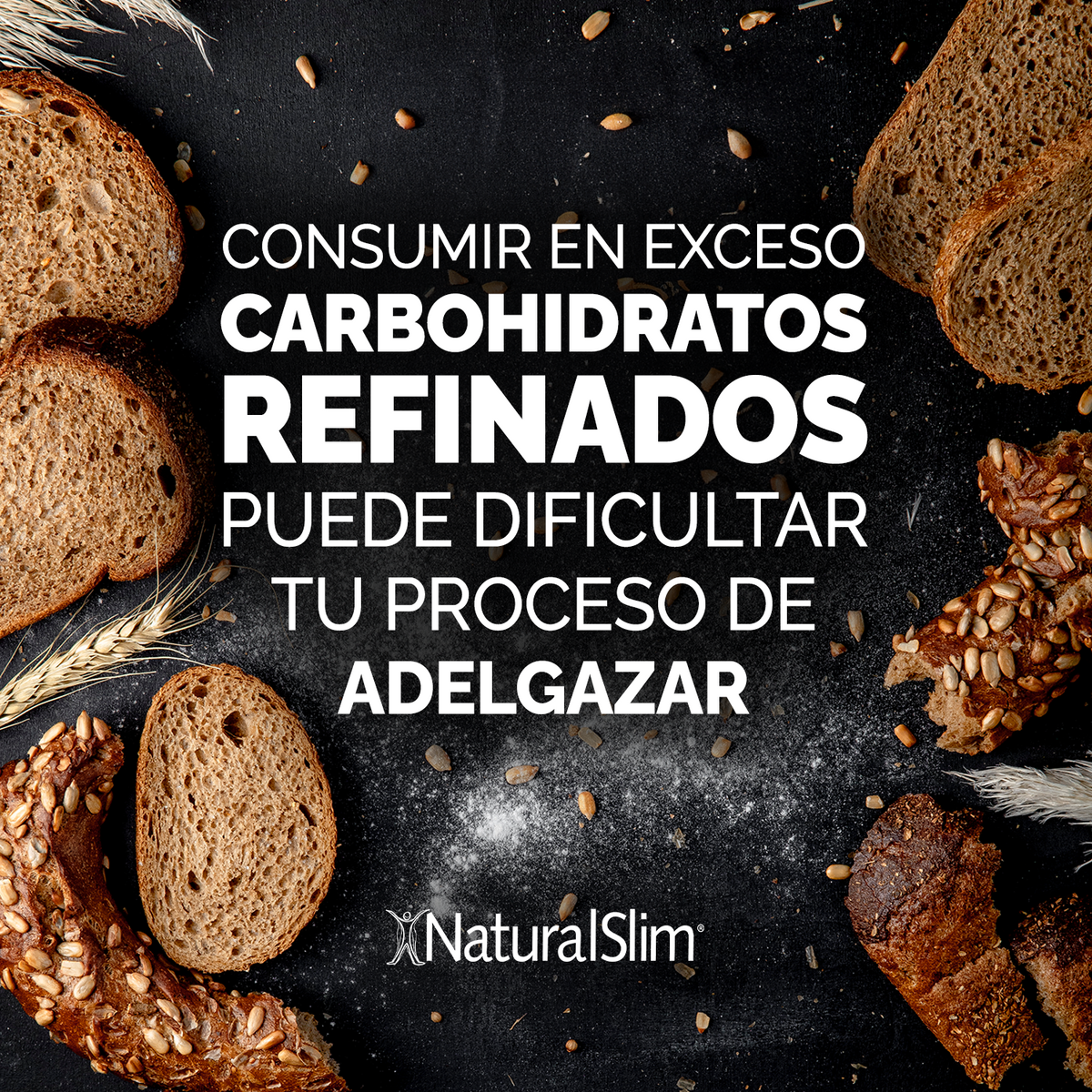
- Refined: the ones that have gone through heavy processing — heat, milling, pulverising — which often strips away the fibre and part of the nutrients.
Think of your body as an engine and food as the fuel. A natural carbohydrate is a fuel the engine works through slowly. A refined carbohydrate has already been "pre-digested" by industry: the body absorbs it very fast, without the natural brake that fibre provides. That's exactly why it's so easy to eat too much of it without noticing.
Examples of refined carbohydrates
Refined wheat flour is the classic example. To make it, the grain is heated and ground into a fine powder the body soaks up in an instant. From it come white bread, pastries, biscuits, white pasta and many processed products.
Table sugar, soft drinks and sweets are also, in practice, refined carbohydrates in their purest form.
When cooking changes things
Here's the detail almost nobody tells you: the cooking process itself can turn a natural carbohydrate into one the body treats as refined.
A raw potato is pure starch. But once you cook it, that starch softens and the body absorbs it much faster. The same happens with legumes and with baked fruit: a raw apple is a wonderful food, but that very same apple, baked, changes its structure and becomes far easier to absorb.
This isn't about forbidding anything. It's about understanding what's in front of you so you can decide with knowledge.
This is where the 3x1 Diet® comes in
One of the simplest and most powerful tools in the NaturalSlim® System is the 3x1 Diet®, explained by Frank Suárez in his book The Power of Your Metabolism. It isn't a diet of bans — it's a way of balancing your plate.
The idea is to sort foods into two groups based on how they affect your body:
- Type A foods — the ones that help you slim down: vegetables, salads, meat, fish, eggs, cheese. This is where the natural, lighter carbohydrates belong.
- Type E foods — the ones that tend to add weight: precisely the refined carbohydrates — bread, flours, rice, pasta, sweets — and the starches the body absorbs quickly.
The proportion is the key: ¾ of the plate Type A foods and ¼ Type E foods. That way you keep a balance that looks after your metabolism without having to give up everything you enjoy. There are no forbidden foods — just smart proportions.
What if cravings are the hard part?
Many people know what they should eat, but cravings for bread, sweets and flours win the battle again and again. That's completely normal, and it's not a sign of weakness.
Within the NaturalSlim® System there's support designed for exactly those moments: Crave Control™, a supplement many people add to their routine when cravings for refined carbohydrates hit hard. It's one more help, inside an approach that starts by understanding your food.
Knowledge is the first step
Simply being able to tell a natural carbohydrate from a refined one already puts you ahead of most diets you've tried. You don't have to count calories or go hungry — just learn to look at your plate in a new way.
If you'd like to apply all of this to your own situation, you don't have to do it alone. At NaturalSlim Europe you have a team of Certified Metabolism Consultants™ ready to guide you step by step. There's nothing to buy to get started: the first step is simply talking to someone who understands your metabolism. You can explore the NaturalSlim Personal Program whenever you like.



Share:
Magnesium: Benefits, Types and Why Citrate Absorbs Best
What Type of Magnesium Should You Take? Citrate vs Oxide